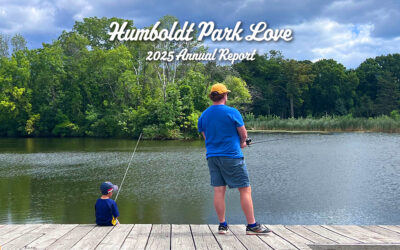
Humboldt Park Friends 2025 Annual Report
2025 was a year of growth for Humboldt Park and the Humboldt Park Friends Group. With the grant we received from the Anthropocene Alliance, or A2, the nation’s largest coalition of frontline communities fighting for environmental protection we were able to do more...
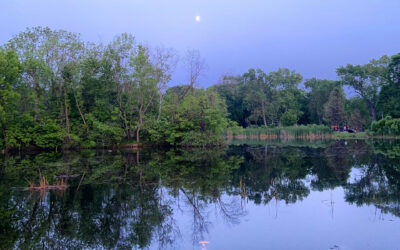
Celebrating a Year at Humboldt Park—Together, We Can Thrive
The divisions among us seem to draw more attention locally and around the world each day. Borders and biases, causes and confusions, upsets and upheavals — they all challenge us to bridge the divides, but too often we just don’t know how. At holiday parties, we carefully curate our guest lists and manage seating arrangements. There are so many taboo topics that we are sometimes at a loss for what to say.
Father of the Environmental Movement—Follow His Lead
On September 14, 1869, 15,000 people in New York marched through Central Park with torches in celebration of the 100th anniversary of the birth of Alexander von Humboldt, the scientist and explorer for whom Humboldt Park is named. Similar events were held in Melbourne, Adelaide, Buenos Aires, Mexico City, Moscow, and Alexandria. In addition to New York, the U.S. celebrated von Humboldt’s contributions in San Francisco, Philadelphia, Chicago, Charleston, Cleveland, and Syracuse. President Ulysses Grant joined a crowd of 10,000 in Pittsburgh to honor the man.
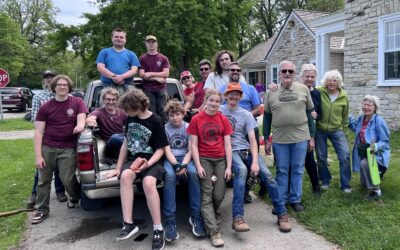
Honoring Our Volunteers—Join Us in Making a Difference
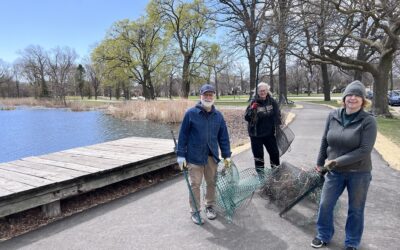
There’s Ally, Anne, Aral, Becca, Cynthia, and Dan. There’s Dawn, Debbie, Eric, Frank, Jane, Jenny, Julia, Kayleigh, and Kelly. We can’t forget Lacey, Linda, Luke, Marie, Matt, Myron, Nick, or Paul. Then, of course, we must include Reuben, Rob, Ryan, Sally, Sharon, Steve, and Virginia.
Clearly, the list goes on as these are only a sample of the scores of individuals who volunteered with Humboldt Park Friends this year. While some focus on particular events and activities, others are back most days of the year. They are a community of people who care about and for Humboldt Park.
Learning in the Park—Support Opportunities for All Ages
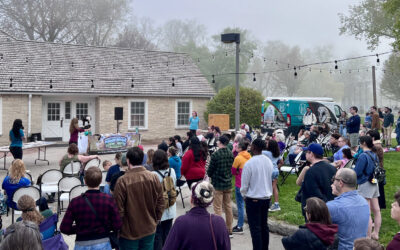
2025 featured informative events and activities for varied interests. Our Humboldt in Harmony educational series included an evening with Milwaukee Historian, John Gurda, who put Humboldt Park in the context of the first parks in Milwaukee, tracing back more than 125 years.
Bring Music to the Park—Keep Our Community Sounds Alive
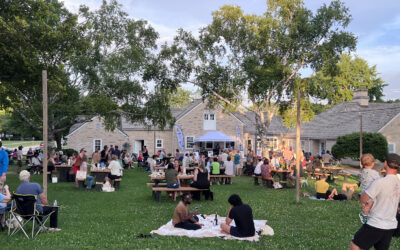
In 2025, hundreds of music lovers came to Humboldt Park to hear the Donna Woodall Group, Samuel Catral Quartet, SUGO, Faculty and Youth Combos from Milwaukee Jazz Institute, Faith Hatch and Steve Peplin, John Christensen Quartet, Tlalok Rodriguez Latin Jazz Quintet, and The Prairie School Jazz Combo – KASE.
Joy in the Park: Help Create Memories for Kids
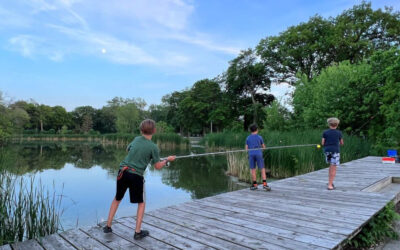
Every day of the year, children engage with Humboldt Park. On the western edge, they splash in the pool in the summer and run around the toddler playground. Near the Pavilion, they climb, slide, swing, and hop. Their schools visit the pollinator garden to count butterflies and draw flowers. They dance in front of the bandshell and sway to jazz tunes.
Spring brings our popular Easter Egg Hunt staffed by seemingly tireless volunteers and supported by area businesses. Young children and toddlers spread out to claim their treat-filled eggs, recycling them in exchange for a coupon. Their antics and squeals of joy animate the park.
Discover the Wildlife of Humboldt Park—Help Them Flourish
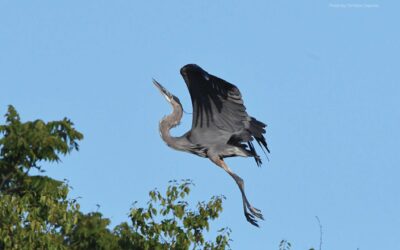
There were days this summer when photographers’ cars lined Park Road and East Idaho Street from dawn until dusk: birders have a way of spreading the word about rare sightings. Their binoculars and cameras fitted out with amazingly long lenses scanned the shoreline and two islands of the lagoon. Some rare, feathered travelers had decided on an extended stay in Humboldt Park.
Support the Pollinators Bringing Life to Our Park
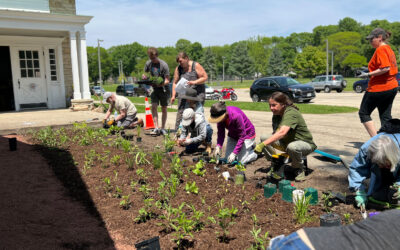
Every day, scores of walkers amble through Humboldt Park. Runners trace its trails, and dogs lead their owners along familiar paths. All are surrounded by the beautiful trees that provide the architecture of the park. A few of the trees predate the parks earliest development in 1890; more than 150 were planted in the last five years as part of a successful campaign to replace those recently lost to emerald ash borer disease.